







Electoral Coup in Honduras: “The Most Manipulated Election in Our History,” Denounces Ochoa
CNE councilor Marlon Ochoa denounced the TREP system as a “trap,” presenting seven key points detailing irregularities such as the elimination of biometric control, errors in 86.6% of tally sheets, and the automatic transfer of votes.
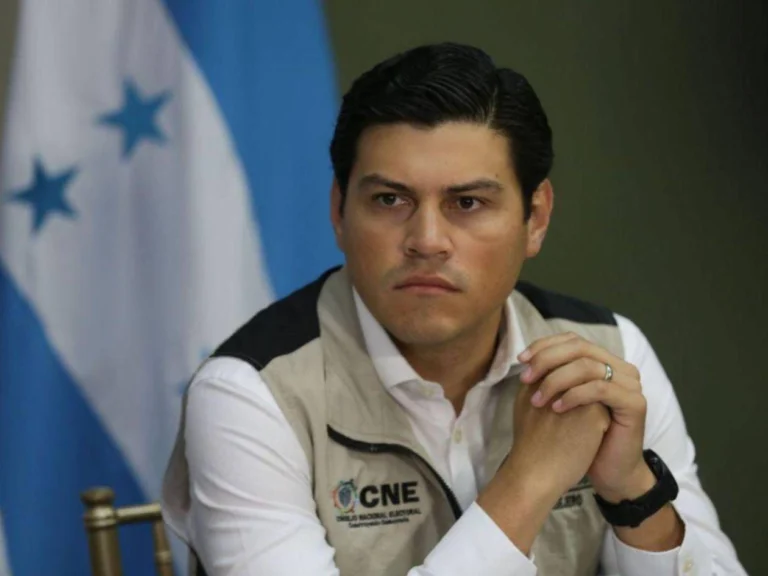
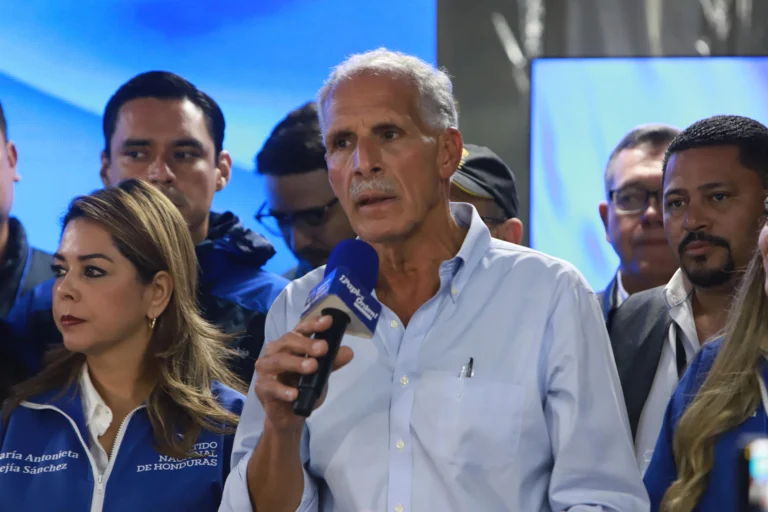
Photo: @Canal8_hn / Screenshot
December 4, 2025 Hour: 10:44 pm
🔗 Comparte este artículo
Marlon Ochoa, a member of Honduras’ National Electoral Council (CNE), addressed the Honduran people this Thursday at a press conference with national and international media, reading a statement entitled “Electoral Coup 2025.”
RELATED:
Electoral Coup: CNE Councilor Denounces Serious Irregularities in Honduras
Ochoa denounced the Preliminary Electoral Results Transmission (TREP) system as a “real trap,” whose deficiencies prevent certainty regarding the results at the presidential and congressional levels, echoing accusations of electoral fraud made by candidate Rixi Moncada (Libre).
During her appearance, which was marked by several technical difficulties, Ochoa outlined seven key points supporting her claim of an “electoral coup”:
1. Elimination of biometric controls: On the night before the elections, Saturday, November 29, the National Electoral Council (CNE), by decision of the two council members from the two-party system, approved a resolution eliminating the mandatory cross-referencing of voters registered on the biometric device with those registered on each tally sheet, violating the Honduran Electoral Law. This measure facilitated the alteration of results.
2. Scandalous results with erroneous tally sheets: Of the 19,167 polling stations nationwide, as of 8:00 a.m. on Wednesday, December 3, only 15,297 tally sheets for the presidential election had been transmitted, representing 69.8 percent. Of these, 13,246 tally sheets, representing 86.6 percent, contain errors and inconsistencies between the biometric record and the content of the tally sheet transmitted by the TREP (Preliminary Results Transmission System). These inconsistencies account for a difference of 982,412 votes.
3. Deliberate structural flaws since the simulation: The November 9 simulation revealed serious structural flaws in the system. Low capacity in tally sheet transmission was observed, as well as the absence of the vote counting module and the automatic dissemination module, and the extraordinary allocation of votes. Although some deficiencies were corrected, Ochoa stated that the necessary guarantees to verify the integrity of the results were not provided.
4. Ignored external audit and internal sabotage: On Saturday, November 29, the day before the elections, the CNE (National Electoral Council) received an external audit report confirming the persistence of critical inconsistencies. Ochoa attempted to read the report aloud in the plenary session, but a council member sabotaged the proceedings, preventing urgent decisions from being made to correct the deficiencies and publicly lying about the report’s contents.
5. Automatic manipulation of vote counts: On election night, thousands of JRB members and custodians observed that the TREP transmission system was not correctly reading or interpreting the handwritten vote counts on the tally sheets. The system assigned unrealistic figures, up to 600 or 700 votes, thus altering the official counts.
6. Automated fraud and vote transfers: The system skipped fields, transferring votes from one candidate to another and from one party to another. This confirmed the manipulation previously reported through leaked audio recordings.
7. Withholding of crucial tally sheets: A total of 1,615 tally sheets were held within the system for 40 hours without clear justification, raising suspicions of manipulation.
Author: HGV
Source: Agencias